Geographic Tongue: What is it?
By Timothy McMahon
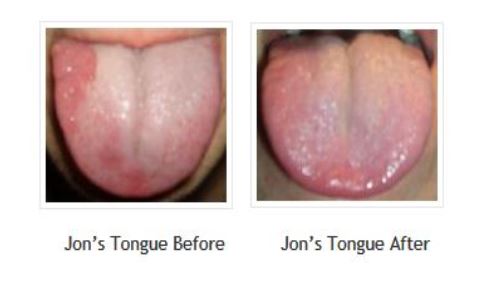
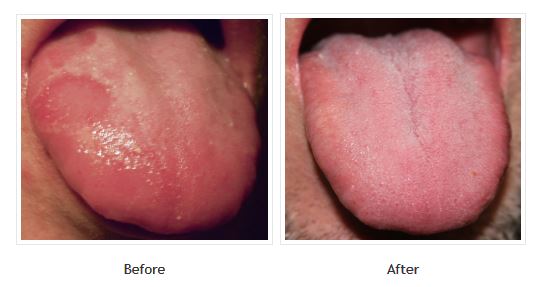
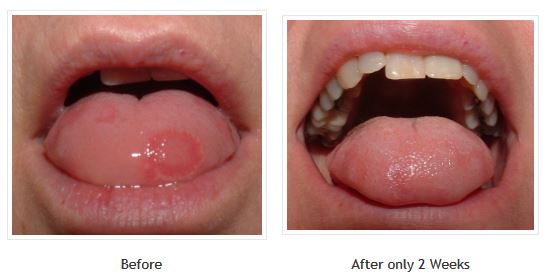
Geographic Tongue is an annoying condition where the tongue develops “Bald” patches often surrounded with a thin white line. It is not considered serious or life threatening by doctors. These patches are called “denuded” meaning that the “papillae” or little bumps on the tongue have actually fallen off. Fortunately the papillae tend to replace themselves in 7 to 10 days.
If you have Geographic Tongue and watch it carefully, as I have, you will notice that the replacement process is what gives the tongue the appearance of the patches moving around on the tongue. This by the way is where the technical name (“Migratory Glossitis”) for geographic tongue comes from. It appears to me that as the older papillae fall off they aren’t replaced quickly enough so the bald patches develop. After a few days new “baby papillae” start to appear within the bald patch but by then another spot is losing its bumps. Continue reading
Who Else Wants A Beautiful Blemish-Free Tongue?
Dear Tongue Sufferer,
Welcome to GeographicTongue.org. If you, or someone you know, is suffering from a tongue problem— whether it be Geographic Tongue, Tongue Fissures (or Cracks), Thrush or any other tongue problem— you have come to the right place. Continue reading
Probiotics- How Much Should I Take?
Probiotics are often controversial but are becoming more and more accepted by the mainstream medical establishment every day. In my personal experience, I’ve found probiotics to be almost “lifesaving” I can’t say too many good things about how helpful they are. Their major function is to keep yeast in check in your body by preventing harmful bacterial growth and promoting a natural balance. Without the proper probiotics, organisms like yeast will run rampant causing Thrush, and other yeast (candida) related problems. Probiotics have been found helpful in treating irritable bowel syndrome and inflammatory bowel diseases like Crohn’s disease. Studies have demonstrated that probiotics have been found helpful in managing lactose intolerance and for things as diverse as lowering blood pressure, improving mineral absorption and even improving immune function.
Probiotics are defined as “Live microorganisms which when administered in adequate amounts confer a health benefit on the host”. Lactic acid bacteria (LAB) such as Lactobacillus acidophilus, Lactobacillus salivarius, and Lactobacillus reuteri are three of the common forms of this type of bacteria that ferment milk products into useful foods like yogurt and kefir. Another common microbes used as a probiotic is bifidobacteria. Today we have an article by David Oromaner. David is a vitamin, herb, and nutritional supplement specialist with over 25 years experience in the health and wellness industry.
What is the Right Probiotic Dosage?
Probiotics are the friendly bacteria that live in our digestive tract and they are getting more respected and more widely used everyday. In years past it was mainly natural health practitioners that would regularly recommend them to treat and prevent various conditions. Nowadays I see doctor’s notes almost daily recommending probiotics to their patients for many different reasons. Very commonly they are being prescribed for gastrointestinal disorders such as diverticulitis, diarrhea, and food poisoning. It is also very common to see them prescribed for use during and after antibiotic therapy, because it is know well known that antibiotics kill off the good bacteria along with the bad bacteria in the body. The question most of my clients have is how much should I take? This will be the focus of this article.Probiotics potency is measured in CFU (Colony Forming Units). Simply stated, how many good bacteria are you getting per dosage? They can be purchased in a wide and often confusing array of dosages ranging for one billion CFU to two hundred billion CFU. From 1 to 200 billion, that is a very wide dosage range. It is no wonder people do not know what they should do. Here is my take on the dosage. Continue reading

Recent Comments