Dear Geographic Tongue Sufferer:
I have some exciting news for you, despite what you’ve heard. You can treat and beat your geographic tongue problem. In as little as two weeks, you can have a plump, pink tongue free of ugly, sore patches. You won’t have to take prescription drugs and you won’t have to see a medical specialist.
I know it’s hard to believe that your tongue can get better than you’ve ever imagined.
Imagine actually being able to enjoy meeting and speaking with friends, family and strangers, without worrying about them seeing your tongue.
Here are a few amazing facts that you may not know:
- According to Biology and Pathology of the Oral Mucosa, approximately two percent of the world’s population suffers from Geographic Tongue. i
- A study conducted by Tel Aviv University’s Department of Oral Pathology and Oral Medicine in 2004, found an amazing 12.7% of the 2,464 healthy Israeli adults had Geographic Tongue.ii
- A study of 906 Turkish schoolchildren between the ages of 6 and 12 found almost 5% had some type of tongue problem with nearly 2% of these being Geographic Tongue.iii
- More women than men suffer from Geographic Tongue according to a medical study conducted by Semmelweis University of Medicine in Budapest, Hungary.iv But in children, boys tend to have it more than girls do.v
- Medical practitioners will tell you there is no cure, yet I have been able to eliminate my Geographic Tongue as have hundreds of others who have read my book AND followed my advice.
Just a Coincidence?
When my Geographic Tongue disappeared, I had to ask myself was this a coincidence or had I actually stumbled upon the solution to my problem. I wanted to be sure so I experimented and was able to reproduce the same results repeatedly.
I was so excited, I had to see if anyone else had discovered the solution as well. I researched Geographic Tongue for almost two years and found that no one had the answer. Therefore, I compiled my research into a book so that I could share my findings with other Geographic Tongue sufferers like you.
If the Doctors weren’t going to help their patients, I knew I had to! I’ve been where you are right now…afraid to show my tongue in public, embarrassed to kiss my wife, avoiding meeting new people.
Why Should You Believe Me?
I know the medical establishment says that this is impossible, so I know that it may be hard for you to believe…
But, all I can tell you is I’ve been there and done it. And because of a unique digestive problem I can make my Geographic Tongue come and go at will! Not that I enjoy making it come back!
But because I can make it come and go at will… I have proven a definite cause and effect relationship.
But you don’t have to take my word for it…
Here’s what some of my readers have to say:

Hi Tim,
My daughter is 98 % back to normal… It took 3 weeks for her tongue to improve. At first it kept getting worse and I felt like giving up. Thank you very much. Your book and advice was the answer to my prayers… Thank you! Her geographic tongue is no longer!
Christine and Sylvia
Thank-You for your information it has been Life changing.
–Vanessa
… as long as I follow the book Ethan [age 3] is symptom free.
– Christi and Ethan, St. Albans, W.V.
Hi Tim, things are much better .
I am healthy, my tongue much better and I don’t worry about it anymore…
You were the most help of anyone when I was most concerned.
I really appreciate it…
Dave
At first I was wondering if your system would work on pregnancy induced geo tongue but I have to tell you this- I started on the treatment you mentioned and my tongue cleared up in two days!
Karen Trevino
On August 19th I bought your Healthy Tongue Secrets book and began looking for solutions based on the premise of treating it from the inside – out rather than just treating the tongue externally.
Your book has taught me ways of dealing with my problem and how to deal with the problem that the medical profession couldn’t throw a cure at. After only a month, it is much better already! As you can see from the before and after pictures! Thanks so much for the help!
Jon Askill
Birmingham, Great Britain
 Thank you for saving me…YES, saving me. Without your hard work and e-book I’m not sure the condition I would be in today.
I have suffered geographical tongue for perhaps two years. My doctor said, “You picked the wrong parents, it’s nothing to worry about, it’s painless.” Sound familiar? I tried to forget it but it became increasingly harder to do.
I searched the Internet for info and gathered bits and pieces but nothing concrete. I had all but given up when I tried, years later, to search the Internet again. I wasn’t hopeful because I had looked before. But this time I found your site…the site that would change my life in more ways than one…
In eight days I am totally changed!! By the fourth day I had reversed all my symptoms including that horrible depression my doctor said was menopause. It wasn’t menopause at all!
I thought I was losing my mind and to make matters worse I was battling an extreme bout with GT.
I am a changed person and I owe it all to you. What a difference you’ve made in my life. I want you to know that I am SO happy to have found your site.
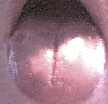
I am sending a before and after shot of my tongue. I wish I had taken a shot a day or two before I took this one on the 12th of May. It doesn’t look too terribly bad but it was.
 |
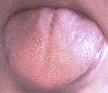 |
| May 12th | May 21st |
I was impressed, before buying your e-book, that you offered a money back guarantee. I felt I had nothing to lose and everything to gain. With that you gained my trust. I HAD to trust somebody and my doctor was obviously not the right choice.
There is so much information in your e-book…I am still reading it. Thanks again Tim. Words cannot express my gratitude. One by one you are enriching lives that desperately need your help!
Best Wishes,
Charlene Ashley
St. Petersburg, Florida
Hi Tim,
Off and on for several years, I have suffered from burning mouth. I attribute it to the stresses of my life. Last December, just before Christmas, my mouth started burning, my tongue was a coated mess, I got painful white patches all over the inside of my mouth and the roof of my mouth became a painful washboard. My gums were sore and swollen in spots which would move around, but did not bleed as with gingivitus. I figured herpes or candida was to blame so I took acyclovir and oil of oreganol. February came and I was still in pain so I went to the doctor who assured me it wasn’t candida or herpes. He said it was the coxsackie virus and there was nothing I could do but wait for it to go away in about two weeks….. imagine that (after I had been suffering since Dec.!) He gave me the lidocaine mixture and said to wait. Meanwhile I continued research on the web. I did have a bout of cold sores too. There was no relief and my tongue started to get worse. It became so sore. First it was just on one side, then spread to the tip. The inside of my lips felt full of little blisters. I finally found your website and just a week ago downloaded your e-book. I bought everything you mentioned and immediately started the treatment on the 12th of March. Within 3 days, my mouth stopped burning and the coating on my tongue started to go away. Today, March 18th, my tongue is not sore, my mouth doesn’t burn and the little blisters in my lips are gone. I don’t know which vitamins or minerals I was lacking, but I am a true believer now and will continue taking this cocktail for the rest of my life. Thank you for your e-book, it was worth every penny.
Sincerely,
Carole Christensen
Tim,
I can’t say thank you enough for the research you have done and sharing your knowledge with us. I ordered your e-book last week and started to take your advice, and the results are amazing! I have spent countless hours and alot of money trying to get a healthy tongue again, but nothing has worked until I came across your website! The cost of your book is worth every penny! Please share my letter with your readers. I don’t normally send letters or give comments on products that I order, but this has been such a lifechanging experience to finally find something that works that I encourage others to invest in this book to see for themselves. Thank you so much for sharing your research and knowledge with us.
-Cindy Ly-
Amazing isn’t it, I don’t think I need to express my disappointment with the medical community. No one really seems to want to be bothered. Shove the problem off onto the next guy. So then I found your site and I’m so very glad I did…
The geographic tongue appears to be gone, and the fissures around the sides of my tongue aren’t so irritated, and my tongue looks less injured. I’ve tried the green tea, very delightful. I still need to be careful with what I eat and drink, nothing too spicy or acidic.
Thanks so much for caring, and for all of the useful information. I have yet to continue my vitamins and try some of the other suggestions you’ve sent along.
Best regards,
Denise
hey ive been taking vitamins 4 days can’t believe results omg i bn suffering almost two years w gt thought i had cancer went to specialist and they cut small lesion off my tongue which reallyhurt bad and it was negitive stated i didnt hv hpv couldnt understand why my tongue was doing this but i read ur book omg how this is going change my life im so amazed everyone should know secrets of healthy tongue u have a ministry tool not just healing god bless u
patricia k
The information you will find in Treating and Beating Geographic Tongue and Other Tongue Problems is truly the most complete source for Geographic Tongue that you can find. Sure, there are a few other books out there and even a few websites. I’ve purchased their products and there is NO COMPARISON! One book has just 27 pages, which includes the cover and a long quote from Wikipedia and sells for $47.
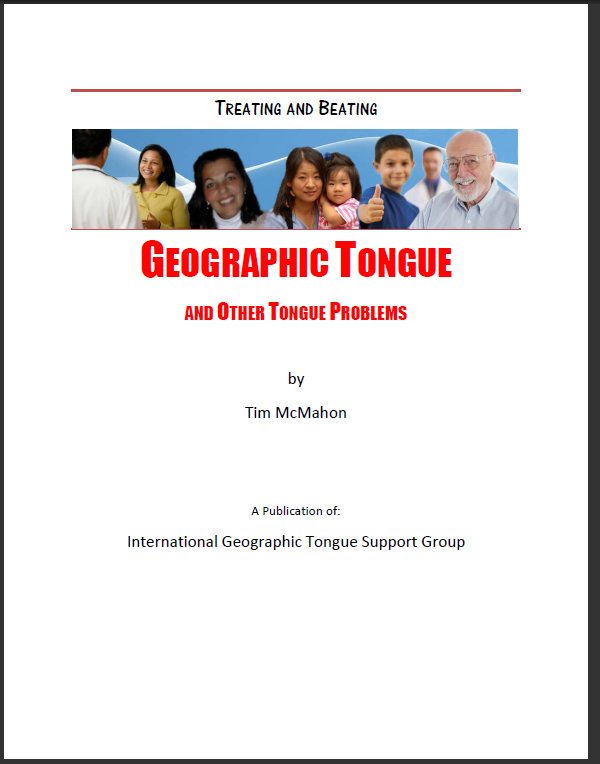
Treating and Beating Geographic Tongue and Other Tongue Problems has 173 unique 8 ½” x 11″ pages. This includes a clickable Table of Contents and helpful Index so you can quickly find exactly what you need.
I have put together everything you need to know about having a healthy tongue in one place. In fact, my Treating and Beating Geographic Tongue and Other Tongue Problems book is the only place in the world you can find this information.
Right now, for a limited time, I’m making a special promotional offer. I want to get this book out to Geographic Tongue sufferers, so they can see for themselves the remarkable results that they can have by following my simple plan. Since 2006, literally thousands of people have discovered how to heal their tongues in my first edition of the book, Healthy Tongue Secrets Revealed. They shared their results with me, which I’ve combined with new research on geographic tongue, black hairy tongue, burning tongue syndrome, fissured tongue and thrush. Now you have the opportunity to benefit through the newest edition of my book, Treating and Beating Geographic Tongue and Other Tongue Problems.
Specialized books of this nature usually sell for $50 to $75. But in an effort to help as many people as possible I’m offering the unique information in Treating and Beating Geographic Tongue for only $39.95
 |
If you act today, you can take advantage of my limited-time, introductory offer and get my revolutionary book Treating and Beating Geographic Tongue for only $39.95.  Sincerely,
|
|||
|


|
Yes Tim! I want to eliminate my Tongue Problems… I understand that you include information on eliminating Geographic Tongue, Fissured Tongue, Beefy Enlarged Tongue, Burning Tongue, Thrush, and other Tongue Problems but it doesn’t happen overnight, so I want to download your information immediately so I can get started right NOW! Only $39.95
Your Order is 100% Safe, Secure,
|


 |
 |
 |
  |
Footnotes:
[i] Ship, Jonathan A.; Joan Phelan, and A. Ross Kerr (2003). “Chapter 112: Biology and Pathology of the Oral Mucosa”. In Freedberg et al. Fitzpatrick’s Dermatology in General Medicine.(6th ed.). McGraw-Hill. pp. 1208.
[ii] Department of Oral Pathology and Oral Medicine, Maurice and Gabriela Goldschleger School of Dental Medicine, Tel Aviv University, Tel Aviv, Israel.
[iii] Department of Oral and Maxillofacial Surgery, Faculty of Dentistry, University of Gazi, Ankara, Turkey.
[iv] Department of Conservative Dentistry, Faculty of Dentistry, Semmelweis University of Medicine, Budapest, Hungary.
[v] Department of Oral and Maxillofacial Surgery, Faculty of Dentistry, University of Gazi, Ankara, Turkey.